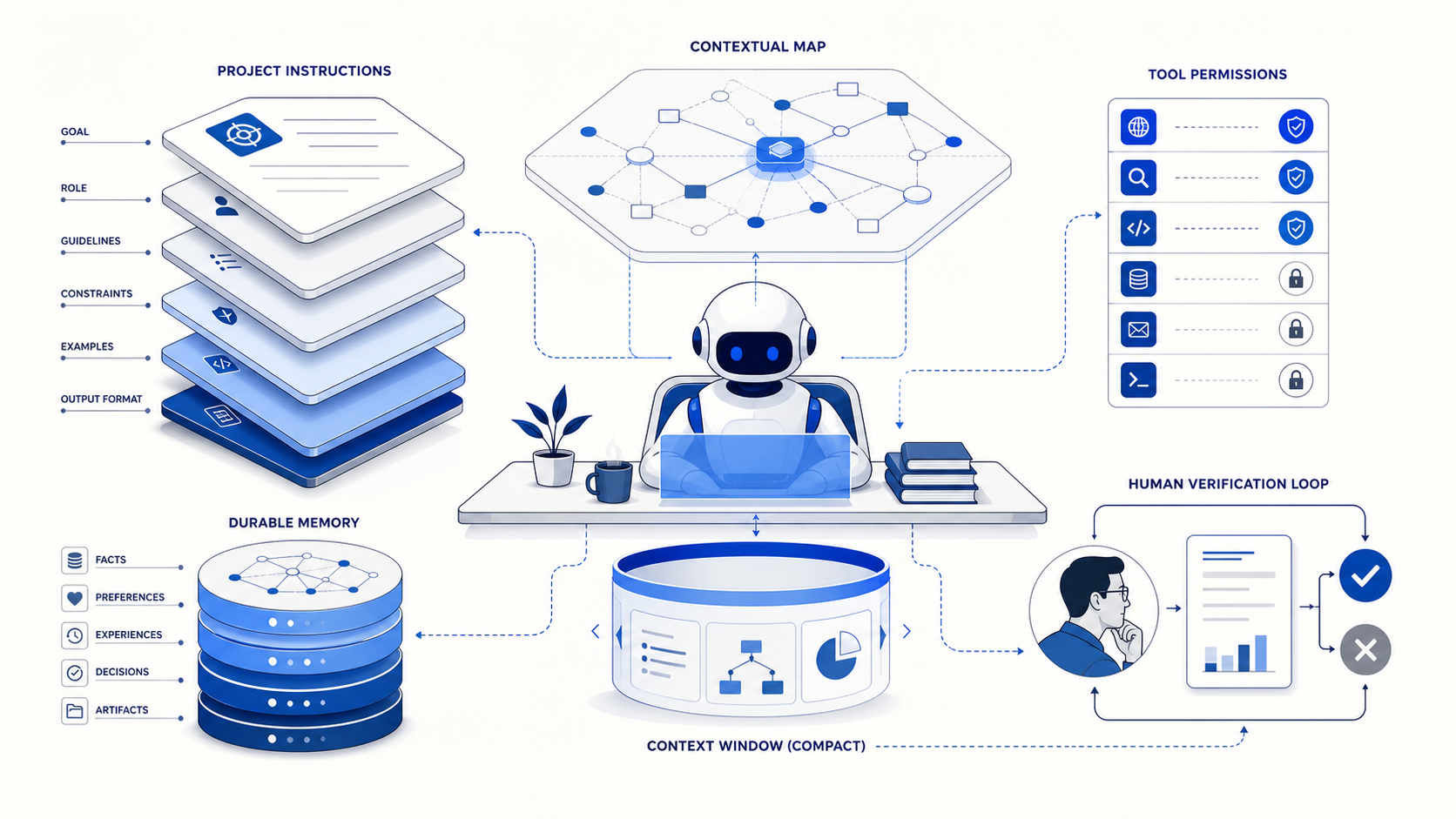
Claude Code can inspect a codebase, use tools and work through a multi-step task. That ability is only dependable when the information it receives is separated by purpose. Project instructions should express stable conventions; task prompts should express the change at hand; memory should preserve useful context without becoming an unbounded archive; and tools should be granted only where they are needed.
The product documentation describes an agentic loop in which tool results inform the next action, and it points to skills, MCP, hooks and subagents as extensions rather than substitutes for that loop. This matters because a long list of integrations can create the impression of capability while making it unclear which tool produced a particular conclusion or changed a file.
For large repositories, the most valuable habit is to explore before implementing. Ask the agent to identify the relevant files and tests, state its plan, and surface assumptions before it edits. Then give it a narrow verification target. This reduces the common failure mode in which a locally coherent patch breaks a convention that lived elsewhere in the codebase.
A review-ready Claude Code workflow leaves an evidence trail: what context was used, which commands ran, what changed and what remains uncertain. That is more useful than a claim of autonomy. It lets a team adopt agent assistance without giving up the engineering judgement that protects production systems.